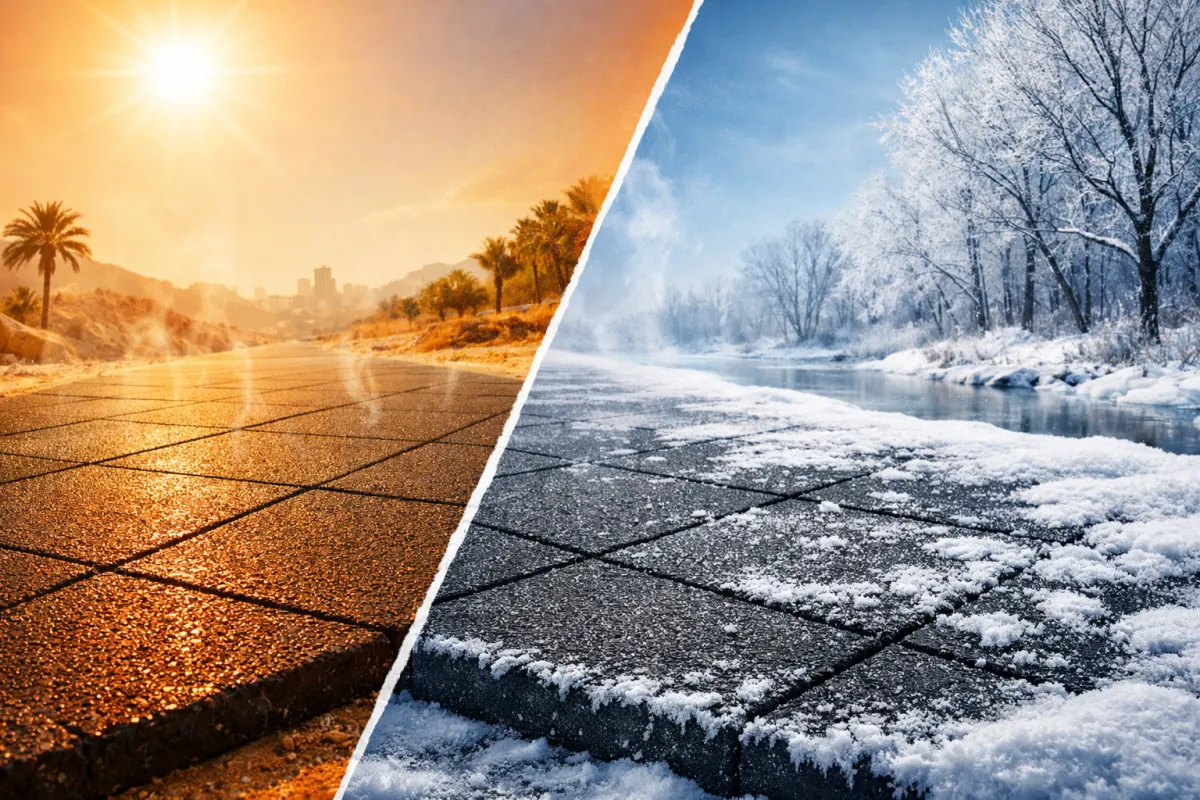
Rubber Paving Extreme Temperatures: Performance, Benefits, and Real-World Durability
Rubber Paving Extreme Temperatures: Performance, Benefits, and Real-World Durability
Introduction: Why Extreme Temperatures Matter in Rubber Paving
If you’ve ever walked barefoot across scorching concrete in summer or slipped on cracked pavement during winter, you already understand why surface materials and temperature matter. When it comes torubber paving extreme temperatures, the conversation goes far beyond comfort—it’s about durability, safety, cost, and long-term performance. Rubber paving has grown rapidly in popularity for residential, commercial, and municipal applications, but many people still wonder:How does it really hold up when temperatures swing to the extremes?
Extreme heat and extreme cold can destroy traditional paving materials. Concrete expands and cracks. Asphalt softens, deforms, and becomes brittle over time. Rubber paving, on the other hand, behaves differently—and that difference is exactly why it’s gaining traction in climates once thought too harsh for flexible surfaces. From desert heatwaves to sub-zero winters, rubber paving is increasingly being tested in real-world conditions.
In this article, we’ll break down how rubber paving performs under extreme temperatures, why its material composition matters, and what homeowners, contractors, and city planners need to know before choosing it. We’ll compare it with traditional paving, explore installation and maintenance considerations, and look ahead at future innovations designed specifically for harsh climates. Whether you’re dealing with blazing summers, freezing winters, or both, this guide will give you a clear, practical understanding of rubber paving’s temperature resilience.
Understanding Rubber Paving Materials
What Rubber Paving Is Made Of
Rubber paving is primarily made from recycled rubber—most commonly sourced from used vehicle tires. These tires are processed into granules or crumbs, which are then combined with polyurethane or similar binders. This combination creates a flexible yet durable surface that behaves very differently from rigid paving materials.
What makes this composition especially important forrubber paving extreme temperaturesis elasticity. Rubber naturally expands and contracts without cracking, which allows it to adapt to temperature fluctuations. Unlike concrete, which relies on rigidity for strength, rubber paving relies on flexibility. That flexibility is its secret weapon in harsh climates.
In addition to rubber granules, many manufacturers add UV stabilizers, color pigments, and bonding agents designed to improve resistance to sunlight and temperature extremes. The quality and ratio of these ingredients play a major role in how well rubber paving performs in hot or cold environments.
How Rubber Paving Is Manufactured
The manufacturing process directly impacts temperature performance. Rubber granules are carefully graded by size and mixed with a binder that cures into a flexible matrix. When installed, this mixture forms a seamless or modular surface that distributes stress evenly.
High-quality rubber paving uses binders engineered to withstand thermal expansion without breaking down. Cheaper alternatives often cut corners here, leading to softening in extreme heat or brittleness in cold weather. This is why not all rubber paving products perform equally when exposed to temperature extremes.
Key Physical Properties That Affect Temperature Performance
Several physical properties determine how rubber paving behaves in extreme conditions:
Elasticity:Allows expansion and contraction without cracking
Thermal stability:Maintains structure under heat
Low water absorption:Reduces freeze-thaw damage
UV resistance:Prevents surface degradation in hot climates
Together, these properties explain why rubber paving often outperforms traditional materials when temperatures push the limits.
Rubber Paving in Extreme Heat
How Rubber Paving Responds to High Temperatures
In extreme heat, many paving surfaces become uncomfortable—or even unsafe. Asphalt can soften and deform, while concrete absorbs and radiates heat like a furnace. Rubber paving reacts differently. While it does warm up, it retains flexibility rather than becoming brittle or structurally compromised.
One major advantage of rubber paving extreme temperatures is its ability to dissipate heat more evenly. Rubber does not store heat as aggressively as concrete, making it more comfortable underfoot. This is especially important in playgrounds, pool decks, and pedestrian areas.
Heat Expansion, Softening, and Structural Stability
All materials expand in heat, but rubber paving expands without cracking. Its flexible nature allows it to stretch slightly and then return to its original shape as temperatures drop. Properly installed rubber paving includes expansion allowances that prevent buckling or surface distortion.
Low-quality installations may experience minor softening in extreme heat, but this is usually temporary and cosmetic rather than structural. High-quality rubber paving remains stable even during prolonged heatwaves.
UV Exposure and Surface Degradation
Sunlight is often more damaging than heat itself. Prolonged UV exposure can cause fading or surface drying if the rubber is not properly stabilized. Modern rubber paving products include UV inhibitors that dramatically slow this process.
In hot, sunny regions, choosing UV-protected rubber paving is essential. When properly specified, rubber paving can maintain its appearance and performance for decades—even in relentless sun.
Rubber Paving in Extreme Cold
Flexibility and Crack Resistance in Freezing Conditions
Cold temperatures are where rubber paving truly shines. While concrete and asphalt become brittle and prone to cracking, rubber remains flexible. Even at sub-zero temperatures, rubber paving can bend slightly under pressure rather than fracture.
This flexibility dramatically reduces cracking caused by ground movement or thermal contraction. For regions with long winters, this is a major advantage in terms of longevity and maintenance.
Freeze–Thaw Cycles and Long-Term Durability
Freeze–thaw cycles are notorious for destroying pavement. Water seeps into cracks, freezes, expands, and causes further damage. Rubber paving’s low water absorption minimizes this issue. Since it doesn’t crack easily, there are fewer entry points for water.
Over time, this resistance to freeze–thaw damage translates into longer service life and fewer costly repairs—one of the biggest selling points for rubber paving extreme temperatures.
Slip Resistance in Icy Environments
Rubber paving offers superior traction compared to smooth concrete or sealed asphalt. Even when icy, its textured surface provides better grip. This makes it especially valuable for walkways, ramps, and stairs in cold climates where slip-and-fall accidents are a concern.
Comparing Rubber Paving to Traditional Materials in Extreme Temperatures
Rubber vs Concrete
Concrete is strong but unforgiving. It cracks under temperature stress and requires expansion joints to survive climate changes. Rubber paving eliminates many of these issues through flexibility.
Rubber vs Asphalt
Asphalt handles cold better than concrete but struggles in extreme heat, where it can soften and deform. Rubber paving maintains structural integrity across a wider temperature range.
Temperature Performance Summary Table
MaterialExtreme HeatExtreme ColdFreeze–Thaw ResistanceConcreteCracksBrittlePoorAsphaltSoftensModerateFairRubber PavingFlexibleFlexibleExcellent
Climate-Specific Applications of Rubber Paving
Rubber Paving in Hot Desert Climates
In desert environments, rubber paving extreme temperatures performance is particularly valuable. Its UV-resistant formulations and heat tolerance make it ideal for patios, pool decks, and walkways where surface temperature matters.
Rubber Paving in Cold Northern Regions
In northern climates, rubber paving’s crack resistance and traction are game-changers. Municipalities increasingly use it for sidewalks and recreational areas to reduce winter damage and maintenance.
Coastal and Variable Climate Performance
Coastal regions face fluctuating temperatures, humidity, and salt exposure. Rubber paving’s resilience makes it well-suited for these unpredictable conditions.
Installation Considerations for Extreme Temperatures
Optimal Installation Temperatures
Rubber paving should be installed within manufacturer-recommended temperature ranges. Extreme heat or cold during installation can affect curing and bonding.
Adhesives, Expansion Gaps, and Base Preparation
Using temperature-appropriate adhesives and properly prepared bases ensures long-term performance. Expansion gaps allow the material to move naturally with temperature changes.
Common Installation Mistakes to Avoid
Poor drainage, low-quality binders, and rushed curing are common mistakes that reduce performance in extreme climates.
Maintenance of Rubber Paving in Extreme Weather
Heat-Related Maintenance Tips
Regular cleaning and UV-protective coatings help preserve appearance in hot climates.
Cold-Weather Care and Snow Removal
Avoid metal shovels and harsh de-icing chemicals. Rubber paving requires gentler care but less frequent repairs.
Long-Term Maintenance Costs
Rubber paving generally costs less to maintain than traditional materials over its lifespan.
Safety Performance in Extreme Temperatures
Shock Absorption and Comfort
Rubber paving remains comfortable and shock-absorbing regardless of temperature.
Slip Resistance Across Temperature Extremes
Consistent traction is one of its strongest safety benefits.
Accessibility and ADA Considerations
Its smooth yet textured surface meets accessibility standards in all climates.
Environmental Impact and Sustainability
Recycled Rubber and Climate Resilience
Using recycled tires reduces waste while creating climate-resilient surfaces.
Environmental Benefits Compared to Traditional Paving
Lower maintenance and longer lifespan mean reduced environmental impact.
Longevity and Reduced Material Waste
Durability in extreme temperatures translates to fewer replacements and less waste.
Cost vs Value in Extreme Temperature Regions
Initial Costs
Upfront costs may be higher, but performance justifies the investment.
Long-Term Savings
Reduced repairs and longer lifespan save money over time.
Is Rubber Paving Worth It for Extreme Climates?
For most extreme climates, the answer is a clear yes.
Future Innovations in Rubber Paving for Extreme Temperatures
Advanced Binders and Coatings
New formulations continue to improve temperature resistance.
Improved UV and Freeze Resistance
Ongoing innovation is pushing performance limits even further.
What the Future Holds
Rubber paving is evolving into a premium solution for harsh environments.
Conclusion
When it comes torubber paving extreme temperatures, the evidence is clear: flexibility beats rigidity. Rubber paving adapts where traditional materials fail, offering durability, safety, and long-term value in both scorching heat and freezing cold. With proper installation and quality materials, it stands as one of the most resilient paving solutions available today.
Frequently Asked Questions
1. Does rubber paving melt in extreme heat?
No, high-quality rubber paving is engineered to withstand high temperatures without melting.
2. Can rubber paving crack in freezing weather?
Its flexibility makes cracking extremely rare compared to concrete.
3. Is rubber paving slippery in winter?
It provides better traction than most traditional surfaces.
4. How long does rubber paving last in extreme climates?
Typically 20–30 years with proper installation and maintenance.
5. Is rubber paving environmentally friendly?
Yes, it’s made from recycled materials and lasts longer than many alternatives.
